Pallets: Building the better global pallet
Latest Material Handling News
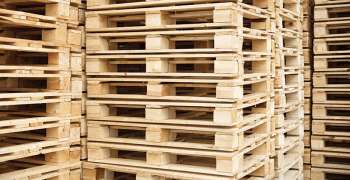
Two voices of reason on pallet materials 60 Seconds with Bob Trebilcock, outgoing executive editor, Modern Materials Handling The reBound Podcast: How Pitney-Bowes is innovating with autonomous vehicles. Packaging Corner: Be open to change 60 Seconds with Robert Martichenko of American Logistics Aid Network More BlogsI had a conversation the other day that illustrated two of my favorite topics. The quest for the better pallet and the globalization of the materials handling industry.
The call was with Sergio Sosa, president of Sosa Tech Advisers. Sosa is an engineer from Mexico City. His specialty is plastics, not pallets. However, he was contacted some time ago by FEMSA Group, a Latin American company and one of the largest publicly-held bottlers of Coca-Cola products in the world, to help them develop a more durable plastic pallet.
The bottler has been using an injection-molded plastic pallet in its bottling facilities in Latin and South America. “The plastic pallet had a longer life cycle than wood, but it cost more,” Sosa told me. “When you did the math, the investment was about the same.”
What the bottler wanted was a plastic pallet that would change the math – one with a significantly longer life span to deliver a lower cost per trip than wood or conventional plastic pallets. When Sosa examined the plastic pallets FEMSA was using, he discovered that about 85% of the failure in the plastic pallets was in the blocks. The problem, he concluded, was that you couldn’t create a thick enough block using an injection molded method. “I started looking at structural foam, because you can have thicker walls than with an injection molded pallet,” Sosa said.
Structural foam, however, is much more expensive than injection molding. Too expensive. So, Sosa developed a new process that he describes as a niche between injection molding and structural foam that he calls inside injection foaming. The process combines traditional injection molding for the pallet with a structural foam process for the blocks that are likely to fail. “After we mold the pallets, we assemble them and then inject foam inside the blocks,” says Sosa. “Because we do this outside of the molding machine, we are able to shorten the time it takes to cool the pallet and lower the production cost.”
Sosa says that after testing and refining the design with FEMSA, they have developed a pallet with a life span that’s about 20% longer than the plastic pallets FEMSA was using, but at a cost that is low enough to lower the per trip cost of the pallet.
They are now producing the pallets in Mexico for Central America and are looking to set up a plant in Colombia or Brazil to service South America.
That’s the new pallet piece of the equation. Just as a number of European systems integrators are looking at our market to expand their businesses, Sosa is also eyeing the North American market to expand his plastic pallet business.
“Our primary market is Mexico,” he said. “But, based on our work with FEMSA, we think we have a pallet that will work in the United States. We want to make connections with customers and suppliers of pallets. If they like our product, we could invest in the U.S.”

Article Topics
Blogs News & Resources
Two voices of reason on pallet materials 60 Seconds with Bob Trebilcock, outgoing executive editor, Modern Materials Handling The reBound Podcast: How Pitney-Bowes is innovating with autonomous vehicles. Packaging Corner: Be open to change 60 Seconds with Robert Martichenko of American Logistics Aid Network The reBound Podcast: Looking for talent in all the right places: How Essendant is revolutionizing recruitment The reBound Podcast: Innovation in the 3PL supply chain More BlogsLatest in Materials Handling
Materials Handling Robotics: The new world of heterogeneous robotic integration Lucas Watson appointed CSO for Körber’s Parcel Logistics business in North America Hyster recognizes Dealers of Distinction for 2023 Carolina Handling names Joe Perkins as COO C-suite Interview with Keith Moore, CEO, AutoScheduler.AI: MODEX was a meeting place for innovation Walmart deploying autonomous lift trucks at four of its high-tech DCs Coles shops big for automation More Materials HandlingAbout the Author

Subscribe to Materials Handling Magazine

Find out what the world's most innovative companies are doing to improve productivity in their plants and distribution centers.
Start your FREE subscription today.
April 2024 Modern Materials Handling
Latest Resources